Mic Drop Moment: South Asian Stand-Up Is Having Its Mainstream Breakthrough — and It's Been a Long Time Coming

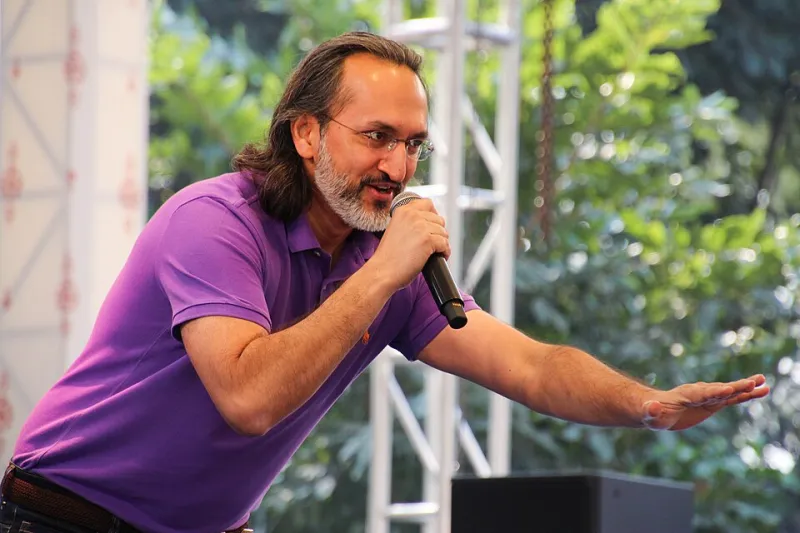
Photo: PersianDutchNetwork, CC BY-SA 4.0, via Wikimedia Commons
Stand-up comedy has always been the art form where outsiders eventually become the insiders. Jewish comedians used it to process the immigrant experience in the mid-twentieth century. Black comedians used it to speak truth to power when other platforms weren't available. Latino comedians used it to reframe how their communities were seen. Every generation, a new voice finds the microphone and changes the room.
Right now, that voice has a desi accent. Sometimes.
South Asian stand-up comedians are having a moment that's starting to feel less like a moment and more like a movement. They're selling out clubs in New York and LA. They're getting Netflix and HBO specials. They're showing up on late-night shows. And they're doing it not by playing to a South Asian American niche, but by saying things that resonate with anyone who's ever felt like an outsider in the country they were born in — or the country they were born to.
Why Now?
The timing of this breakthrough isn't accidental. Several forces converged to make this the right moment.
First, there are simply more South Asian Americans than ever, and they're more economically and culturally embedded in American life than previous generations. They're not just in the audience — they're the audience. When Hasan Minhaj sold out Radio City Music Hall, a significant portion of those seats were filled by South Asian Americans who finally saw themselves reflected in a mainstream comedy context. That audience exists now in a way it didn't twenty years ago.
Second, streaming transformed the comedy special from a prestige TV event into something more democratized and global. A comedian who might have struggled to get a Comedy Central deal can now land a Netflix special that reaches audiences in 190 countries. That's not a small change — it restructured the entire gatekeeping system.
Third — and this is the part that often gets overlooked — South Asian American comedians have been doing the work for years. The overnight success narrative is always misleading. These comedians paid their dues in small clubs, on college campuses, in the alt-comedy scene, in podcasts, in web series. The mainstream is just now catching up to talent that's been developing for a long time.
The Hasan Effect
It would be dishonest to write about South Asian stand-up's mainstream breakthrough without acknowledging the Hasan Minhaj effect. His Netflix special Homecoming King was a watershed moment — a deeply personal, beautifully produced hour of comedy that dealt with racism, family, identity, and belonging in ways that felt genuinely new.
Minhaj went on to host Patriot Act and became one of the most visible South Asian American voices in American media. His success didn't just open doors for other South Asian comedians. It proved to the industry that a South Asian American perspective could carry a full hour of mainstream comedy and find a massive audience.
But Minhaj is one comedian, and the wave he's part of is much bigger than any single person.
A Range of Voices, Not a Monolith
One of the most important things to understand about the South Asian stand-up scene is how diverse it is — not just in terms of ethnicity (Indian, Pakistani, Bangladeshi, Sri Lankan, Nepali comedians all have distinct cultural references), but in terms of comedic style and subject matter.
Ronny Chieng brings a sharp, politically engaged sensibility that's as comfortable roasting American capitalism as it is exploring the specific absurdities of immigrant experience. Aparna Nancherla operates in a more introspective, anxiety-driven mode that's found a devoted following in the alt-comedy world. Russell Peters built a career on broad, observational humor about cultural differences that plays to enormously diverse rooms.
These are not interchangeable comedians. They don't have the same voice, the same politics, or the same approach to the craft. The fact that the industry sometimes treats "South Asian comedian" as a genre unto itself is something many of these performers have explicitly pushed back against — and rightfully so.
What Makes the Perspective Land
So what is it about South Asian American comedy that's connecting with broader American audiences right now?
Part of it is the immigrant experience itself — the specific texture of navigating between two cultural worlds, of parents who sacrificed everything and now have Very Specific Expectations, of being perceived as foreign in the only country you've ever called home. These are experiences that millions of Americans across many communities recognize, even if the specific details differ.
Part of it is the generational shift. Second and third-generation South Asian American comedians are able to look at their own communities with both love and clear-eyed critique. They're not explaining their culture to a white audience — they're examining it with the full complexity of people who grew up inside it. That's a different, richer comedic vein.
And part of it is simply that the material is excellent. Good comedy is good comedy. When a joke is constructed well, when the timing is right, when the observation is true enough to sting — it doesn't require the audience to share the comedian's background. It just requires them to be human.
The Industry Is Still Catching Up
Despite the breakthrough, there are still real structural barriers. South Asian comedians still report that bookers and producers sometimes don't know what to do with them — not fitting neatly into existing diversity frameworks, not always being seen as the right fit for certain rooms.
The comedy industry's gatekeeping has historically been narrow in ways that go beyond race — it's been narrow about class, about regional accent, about subject matter, about who gets to be the butt of the joke. South Asian comedians are challenging all of those dynamics at once, which is both exciting and, occasionally, still frustrating.
But the trajectory is clear. The audiences are there. The talent is there. The specials are getting made.
The Room Is Changing
The next time you're at a comedy club — in New York, LA, Chicago, Houston, wherever — pay attention to who's on stage and who's in the seats. The picture looks different than it did ten years ago. South Asian voices are part of that picture now, not as novelties, not as representatives of a "diverse" quota, but as comedians who earned their spot in front of the mic the same way everyone else did: by being funny.
The takeover nobody predicted is looking more and more like the only logical outcome. And the best part? The comedians themselves are just getting started.