Punchline, Please: How South Asian Stand-Up Comics Are Flipping the Script on Who Gets to Be Funny
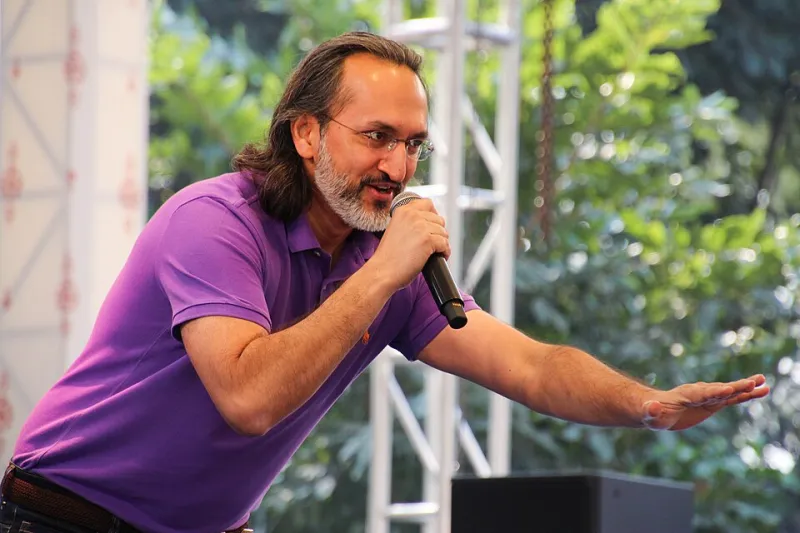
Photo: Sriya Sarkar, CC BY 4.0, via Wikimedia Commons
For a long time, if a South Asian face showed up in an American comedy, you pretty much knew what was coming. The convenience store owner. The over-pronouncing IT guy. The mom who mispronounces everything and somehow still runs the household. The accent was the setup and the punchline, and that was supposed to be enough.
It wasn't enough. And a growing wave of South Asian comedians is making that abundantly clear — not through protest, but through something way more powerful: genuinely funny, deeply personal stand-up that's selling out theaters from New York to Los Angeles and landing on your Netflix homepage whether you asked for it or not.
From the Back of the Room to the Top of the Bill
Let's be real — South Asian performers have been grinding the American comedy circuit for years. But something shifted in the last half-decade. Hasan Minhaj's Homecoming King didn't just go viral; it cracked something open. Here was a desi kid from Davis, California, telling a story about prom night and racism and immigrant parents that made people cry and laugh in the same breath. No caricature. No fake accent for cheap laughs. Just the actual, messy, beautiful texture of a life lived between cultures.
That special gave permission. Not that South Asian comedians needed it — they'd been doing the work — but it signaled to the industry that this audience exists, it's hungry, and it will absolutely show up.
Since then, the doors have been swinging. Comedians like Nimesh Patel, who made history as the first South Asian writer at Saturday Night Live, and Aparna Nancherla, whose deadpan existential humor has built a devoted following, are part of a generation that refuses to be reduced to an accent or a stereotype. Their material is rooted in specificity — the particular anxiety of being first-generation, the strange double consciousness of code-switching at Thanksgiving versus at your nani's house — and that specificity is exactly what makes it universal.
The 'Relatable' Problem, Solved
Here's the thing about mainstream American comedy: for decades, 'relatable' basically meant white and suburban. The cultural reference points, the family dynamics, the romantic frustrations — they all defaulted to a very narrow demographic. South Asian comedians didn't just add diversity to that framework; they blew the framework up.
When a comedian like Urooj Ashfaq — who's been making serious waves on the international circuit — talks about navigating Pakistani family expectations while chasing a creative career in a Western city, she's not asking a white audience to understand her world. She's inviting them in, on her terms, and trusting that human messiness translates across cultural lines. Spoiler: it does.
This is the real shift. The humor isn't about being South Asian in a way that explains the culture to outsiders. It's humor that assumes the audience can keep up. That's a fundamentally different relationship between performer and crowd, and American comedy audiences — especially younger ones — are responding to it enthusiastically.
Festival Floors and Streaming Screens
The data backs this up. South Asian comedians are no longer tucked into niche showcase slots at major festivals. They're headlining stages at Just for Laughs, getting development deals, and yes, getting their own streaming specials. The algorithm has noticed what live audiences already knew.
And it's not just the big names. Across US cities with significant South Asian diaspora populations — the Bay Area, Houston, New Jersey, Chicago — local comedy scenes are thriving with desi performers who are building loyal fanbases through sheer consistency and craft. These aren't performers waiting for Hollywood to discover them. They're building their own rooms.
Social media has been a huge accelerant here. A five-minute clip of a South Asian comedian riffing on aunty culture or the particular horror of being asked about your career at a family function can rack up millions of views overnight. The diaspora shares it. Their non-desi friends share it. Suddenly a comedian who was performing for 200 people in a Brooklyn basement has a national audience.
The Stereotype Isn't Gone — It's Just Outgunned
Let's not pretend the lazy caricatures have vanished entirely. They haven't. You can still find them in network TV, in bit parts, in comedy that hasn't gotten the memo yet. But they're increasingly getting drowned out by the real thing — complex, specific, hilarious South Asian voices who aren't interested in playing a punchline.
What these comedians are doing, show by show and special by special, is expanding what American audiences understand as funny. They're proving that you don't need to sand down your identity to land a joke. In fact, the more specific and honest you are about where you come from, the harder the room laughs.
That's not just good for South Asian representation. That's good for comedy, full stop.
So the next time a South Asian comedian steps up to the mic and the crowd leans in — not to brace for an accent bit, but because they genuinely can't wait to hear what comes next — that's the sound of a cultural shift happening in real time. And honestly? It's hilarious.