Neither Here Nor There — and That's Exactly the Point: How Desi American Artists Are Building a Third Culture All Their Own
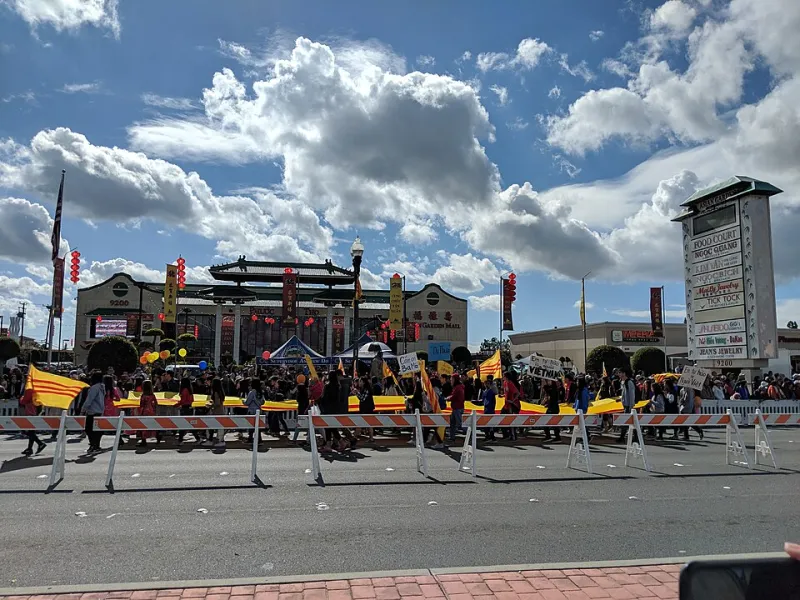
Photo: DHN, CC BY-SA 4.0, via Wikimedia Commons
There's a question a lot of South Asian American kids grew up dreading at school: "Where are you really from?" It's the kind of question that implies you can only belong to one place at a time. But a new wave of desi artists — musicians, filmmakers, songwriters, directors — is answering that question in the most satisfying way possible: by making art that refuses to choose.
Call it the third-culture effect. Call it the diaspora dividend. Whatever you name it, the creative output coming from second and third-generation South Asian Americans right now is some of the most interesting stuff happening in entertainment. And it doesn't sound like Bollywood. It doesn't sound like Nashville or Compton either. It sounds like something brand new.
The In-Between Space Is the Creative Space
For a long time, desi artists in the US faced a kind of invisible fork in the road. Lean into your South Asian roots and risk being boxed into a niche. Assimilate completely and risk losing the very texture that made your perspective worth sharing. A lot of artists spent years trying to navigate that pressure.
But something shifted — culturally, generationally, and commercially. Streaming flattened the gatekeeping walls. Social media let artists build audiences before labels or studios had a say. And suddenly, the in-between wasn't a liability. It was the whole point.
Filmmakers like Minhal Baig (Hala, One for the Road) and Nikhil Nair are telling stories that don't require a non-South Asian audience to have prior context, but reward viewers who do. Their films aren't "immigrant films" in the old, explanatory sense. They're just films — with all the specificity and emotional complexity that comes with growing up between two worlds.
Musicians are doing the same thing. Artists like Priya Ragu blend Tamil melodies with neo-soul production in a way that feels completely organic rather than deliberately fusion-forward. She's not explaining herself to anyone. She's just making music that sounds like her life.
Language as Identity — When English Isn't Enough
One of the most interesting things happening in desi diaspora art right now is the way language is being used — or rather, the way it's being mixed. Code-switching, once a survival skill, has become an aesthetic choice.
You hear it in the music of artists like Riz Ahmed, whose rap flows between English and Urdu in ways that feel less like a translation exercise and more like an emotional necessity. Some feelings, apparently, just land harder in Urdu. Some jokes only work in Punjabi. Some grief is only fully expressible in Tamil.
This isn't a new phenomenon — Spanglish hip-hop has been doing this for decades — but the desi version is finding its own specific rhythm. And American audiences are responding. Not just South Asian American audiences, either. The emotional truth of navigating multiple cultural identities translates across communities in ways that are broader than any one diaspora.
Film Is Finally Catching Up
For years, South Asian American stories in Hollywood were either filtered through a white gaze (the quirky immigrant neighbor, the tech-genius sidekick) or confined to low-budget indie projects that struggled to find distribution. That's changing fast.
Productions like Never Have I Ever cracked open the door by centering a South Indian American teenager's experience without apologizing for its specificity. The show got criticized in some corners for not being desi enough, but that conversation itself was significant — it meant there was now a large enough audience invested in how South Asian American stories get told that the nuances actually mattered.
Behind the camera, South Asian American directors are increasingly getting access to real budgets and creative control. They're not being hired to make "diverse" content. They're being hired because they're good. The distinction matters.
The Sonic Signature of Diaspora
In music, the desi diaspora aesthetic is harder to pin down than a genre label, and that's kind of the whole point. It might show up as a tabla pattern buried under a lo-fi beat. It might be a vocalist slipping from English into Hindi mid-verse without breaking emotional stride. It might be a film score that uses a sarangi where a violin would normally go.
Artists like Arooj Aftab — who won a Grammy for Best Global Music Performance — are proof that this approach isn't commercially marginal. Her music is rooted in Urdu classical tradition but lives comfortably in the same playlists as ambient jazz and contemporary folk. She didn't dilute anything to get there.
That's the thing about third-culture art at its best. It doesn't compromise to reach a wider audience. It trusts that specificity is the bridge.
What This Means for American Culture
The US has always been a place where immigrant cultures eventually reshape the mainstream — you can trace it in jazz, in rock and roll, in hip-hop, in salsa. The desi diaspora is now deep enough, and its artists confident enough, that the same process is happening in real time.
It's not about South Asian culture "breaking through" to American audiences as if those were separate things. Millions of South Asian Americans are American audiences. Their tastes, references, and emotional landscapes are shaping what gets made and what gets celebrated.
The most exciting part? The artists leading this charge aren't waiting for permission or validation from either side of the cultural divide they grew up straddling. They're just making work. Work that sounds like growing up with Bollywood soundtracks and American radio at the same time. Work that feels like belonging everywhere and nowhere simultaneously.
That's not a problem to solve. That's a sound worth listening to.