From Shaadi Season to Saturday Night: How Desi Wedding Beats Took Over America's Dance Floors
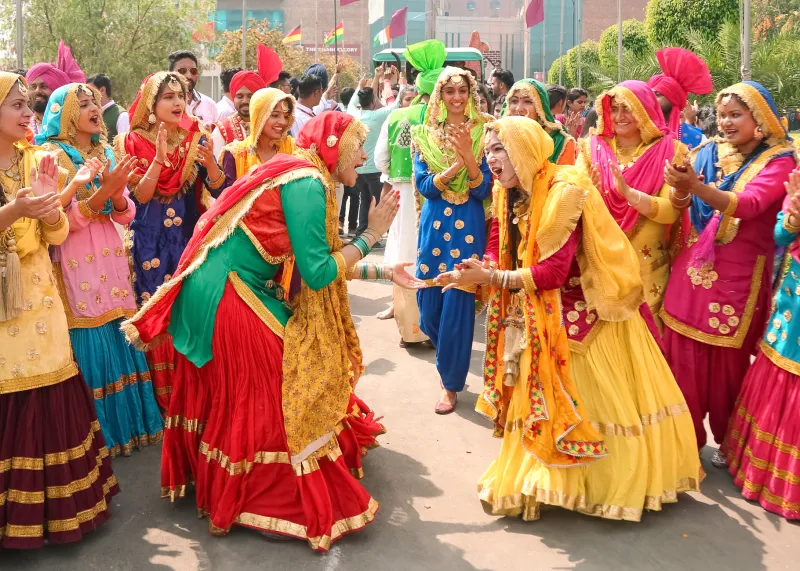
Something strange and wonderful is happening at parties across America. A DJ in a Chicago rooftop bar drops a dhol-heavy edit of a Punjabi folk track, and the crowd — a mix of college students, young professionals, and people who probably couldn't point to Punjab on a map — absolutely loses it. Nobody's confused. Nobody's standing still. Everyone just knows what to do with that beat.
This isn't a fluke. South Asian wedding music, the kind that's been soundtracking baraat processions and sangeet nights for generations, is bleeding into mainstream American party culture at a pace that's hard to ignore. And the people most surprised by it? Sometimes the desi DJs who've been spinning these tracks for years.
The Sound That Travels
There's something almost scientifically irresistible about the architecture of a classic bhangra track. The dhol's two-sided rhythm — that low boom on one side, sharp crack on the other — creates a push-pull energy that's hard for a human body to resist. Layer in a tumbi riff, stack some brass, and you've got a sonic cocktail that doesn't really need cultural context to land. It just works.
Garba and dandiya music operate on a similar principle. The circular, cyclical rhythm structures that come out of Navratri celebrations carry a communal, almost hypnotic quality. When remixed with contemporary production — a little trap hi-hat here, a sub-bass boost there — they slot into modern club contexts like they were always meant to be there.
DJs who work across both South Asian events and mainstream venues have been noticing the crossover for a few years now, but something shifted noticeably around 2022 and 2023. The requests started coming from outside the community. Non-desi partygoers who'd heard a Punjabi MC track at a friend's wedding, or stumbled onto a bhangra playlist while studying, or caught a viral Reels clip of a wedding baraat — they started asking for more.
TikTok Did Something Real Here
Credit where it's due: social media accelerated all of this dramatically. When clips of elaborately choreographed South Asian wedding entrances started racking up tens of millions of views on TikTok, they weren't just showing off stunning outfits and jaw-dropping venues. They were delivering a music education to an audience of millions who had zero prior exposure to these sounds.
A kid in rural Ohio watching a baraat video isn't just seeing a cultural tradition — they're hearing a dhol pattern for the first time and feeling that involuntary head-nod. That's a door opening. And once it opens, the algorithm happily walks them deeper: Punjabi pop, Bollywood item numbers, garba remixes, the whole catalog.
Music curators and playlist editors on streaming platforms noticed the data shifting. Tracks that had historically performed well within diaspora listener demographics started seeing broader geographic spread. A bhangra-fusion track that might've previously peaked within South Asian American listening communities started showing up in "Global Party Hits" and "Dance Floor Certified" playlists — sitting comfortably next to Afrobeats and Latin pop.
High School Gyms and Hotel Ballrooms
Here's a detail that really tells the story: high school DJs in areas with significant South Asian American student populations have been reporting that bhangra tracks and Bollywood remixes have become reliable crowd-movers at prom and homecoming dances. Not because the school is predominantly South Asian — sometimes it's not — but because enough students have been exposed through social media, through friends, through sheer cultural osmosis, that the music feels familiar and fun rather than foreign.
This is what genuine cultural diffusion looks like. It doesn't happen through formal introductions or curated "diversity" programming. It happens when a sound is joyful enough and infectious enough that it just spreads, person to person, aux cord to aux cord.
Wedding DJs who specialize in South Asian events have also noticed something interesting on their end: couples are increasingly asking them to blend their traditional sets with tracks that will resonate with non-desi guests. The goal isn't to water down the music — it's to bring everyone onto the floor together. And the good news is that bhangra, by its nature, is extraordinarily welcoming. You don't need to know the lyrics. You just need a pulse.
What It Means for Desi Artists
For South Asian musicians and producers working in the US, this moment is both exciting and a little complicated. On one hand, wider appreciation for these sounds creates genuine commercial opportunities. Producers who've spent years perfecting the art of the dhol-electronic fusion are suddenly finding their inboxes full of requests from non-desi artists wanting that energy on their tracks.
On the other hand, there's a real conversation happening within the community about what gets carried across and what gets left behind. When a bhangra beat gets stripped of its Punjabi lyrics, repackaged with English verses, and sold as a "global fusion" track, something gets lost in translation. The specific cultural weight of the music — the harvest celebration origins of bhangra, the devotional roots of garba — doesn't always make the journey.
The artists navigating this most thoughtfully are the ones finding ways to bring context along with the sound. Dropping a quick note in their social media captions about where a melody comes from. Keeping original language lyrics even when English would be easier to market. Collaborating with non-desi artists in ways that credit the source rather than obscure it.
The Globalization of Joy
At its core, what's happening here is a story about what makes a sound universal. South Asian wedding music was built to do one thing above everything else: make people feel like celebrating. It was engineered over centuries to generate collective joy, to turn a crowd into a community, to make even the most reluctant uncle get up and dance.
American party culture, for all its eclecticism, has always been hungry for exactly that. We've seen it happen with cumbia, with Afrobeats, with K-pop's infectious choreography culture. When a musical tradition is rooted in pure, uncut celebration energy, it tends to find its audience eventually — regardless of geography or language barrier.
Desi wedding music is just the latest proof of that principle. And honestly? Watching a crowd of people who've never been to a shaadi absolutely go off to a dhol beat feels like its own kind of beautiful thing.
The dance floor doesn't need a passport. It just needs the right track.