No Label, No Problem: How Desi TikTokers Are Writing the Rulebook on What Goes Viral Next
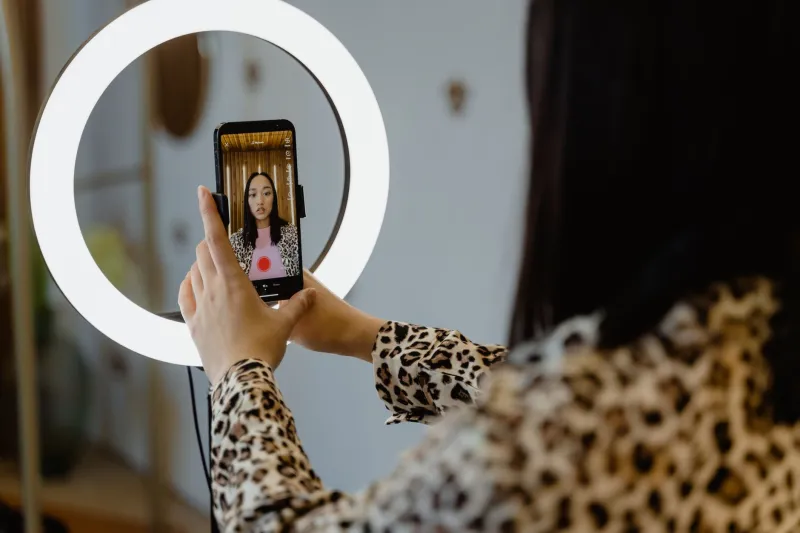
Somewhere between a chai latte and a trending audio clip, a 22-year-old in her New Jersey apartment just decided what the next big song is going to be. No boardroom. No A&R meeting. No publicist. Just her phone, her instincts, and a following that trusts her taste more than any Spotify editorial playlist ever could.
This is the new music industry, and South Asian creators are running a significant chunk of it.
The Gatekeepers Have Left the Building
For decades, breaking a song in America meant navigating a very specific chain of command — get the label, get the radio deal, get the late-night performance slot, and maybe, maybe, cross over into mainstream consciousness. That pipeline still exists, technically. But it's increasingly beside the point.
TikTok changed the math entirely. And within that shift, South Asian creators — many of them first- or second-generation immigrants who grew up code-switching between Bollywood and Billboard — found themselves sitting on a genuinely rare superpower: they understand multiple musical worlds at once.
When a snippet of an Arijit Singh ballad starts looping under emotional transition videos, or when a Punjabi dhol beat gets chopped and flipped into a sound that suddenly every creator from Atlanta to Austin is using, you can usually trace the origin point back to a Desi account. Often one that doesn't even have a blue checkmark yet.
The Mechanics of Making Something Pop
It's not magic, even if it looks like it from the outside. Creators who've built sizable audiences in this space talk about a pretty deliberate process — one that blends cultural fluency with serious platform literacy.
The formula, roughly: find an audio that already has emotional weight within the South Asian community, pair it with content that translates universally (nostalgia, humor, romance, identity), and post at a moment when the algorithm is hungry. If the first wave of engagement hits right, the sound starts migrating. Non-Desi creators pick it up. It gets remixed. Then a mid-size artist notices their song is trending in a country they've never toured, and suddenly their streaming numbers are doing something wild.
What's particularly interesting is how often this happens before any official promotional push. Songs from independent artists in India, Pakistan, and the diaspora have landed on mainstream US radar purely because a creator in Chicago or Houston thought the vibe was right. No press release. No ad spend. Just the right person posting at the right time.
Creators Who Are Quietly Changing the Game
The names doing this work aren't always household names yet — which is kind of the whole point. A lot of them prefer the relative anonymity of being tastemakers rather than talent, at least for now.
But look at the pattern: accounts dedicated to Desi aesthetics, South Asian fashion, or just general "main character" content are consistently the first places where certain sounds gain traction among younger American audiences. These creators have built communities that are intensely loyal precisely because they feel like they're in on something — a piece of culture that the mainstream hasn't commodified yet.
That sense of discovery is currency. And the creators who've figured out how to deliver it consistently are, whether they have a formal title or not, functioning as independent A&R scouts, trend forecasters, and cultural translators all at once.
Labels Are Watching (And They're Playing Catch-Up)
Here's where it gets interesting from an industry perspective. Major labels — the same ones that spent years largely ignoring South Asian music as a viable commercial category in the US — are now dedicating real resources to monitoring Desi creator spaces. Not because they suddenly developed cultural appreciation, but because they've been burned too many times by missing a trend that was sitting right there in plain sight.
There's a growing (and slightly awkward) dynamic where label representatives slide into the DMs of creators who've organically pushed a sound into the zeitgeist, hoping to either sign the artist retroactively or, more often, figure out what that creator is paying attention to next. The creators, for their part, are increasingly aware of their own leverage.
Some have started consulting formally. Others have launched their own micro-labels or content studios. A few have simply decided that the independence is worth more than any deal a major could offer, especially when brand partnerships and creator funds can generate real income without signing away creative control.
The Diaspora Advantage
There's something worth naming explicitly here: the reason South Asian creators are so effective at this particular kind of cultural alchemy is rooted in lived experience that can't really be replicated or reverse-engineered.
Growing up Desi in America means absorbing two (or more) distinct musical traditions simultaneously. It means understanding why a certain melody hits differently during Eid or Diwali, but also knowing exactly which lyric is going to resonate with a non-Desi teenager who's never thought about either holiday. That dual fluency — the ability to hold multiple cultural contexts at once — is genuinely rare, and on a platform like TikTok where cross-cultural resonance is the whole game, it's an enormous edge.
The creators who've leaned into this aren't just making content. They're building bridges between musical worlds that used to exist in completely separate lanes, and in doing so, they're expanding what American pop culture sounds like.
What Comes Next
The honest answer is that nobody fully knows, which is part of what makes this moment so electric. The infrastructure is still being built in real time. Some creators will formalize their influence into proper industry roles. Some will become artists themselves. Some will burn out or pivot. And the platforms themselves will keep shifting the rules in ways that nobody can fully predict.
But the underlying dynamic — South Asian digital natives using cultural fluency and platform savvy to shape global music taste from the outside in — that's not going away. If anything, it's accelerating.
The labels eventually figure out what the kids already know. Right now, a lot of those kids are Desi, they're posting from their apartments, and they're not waiting for anyone's permission.
Pay attention to what they're listening to. It's probably going to be everywhere in about six weeks.