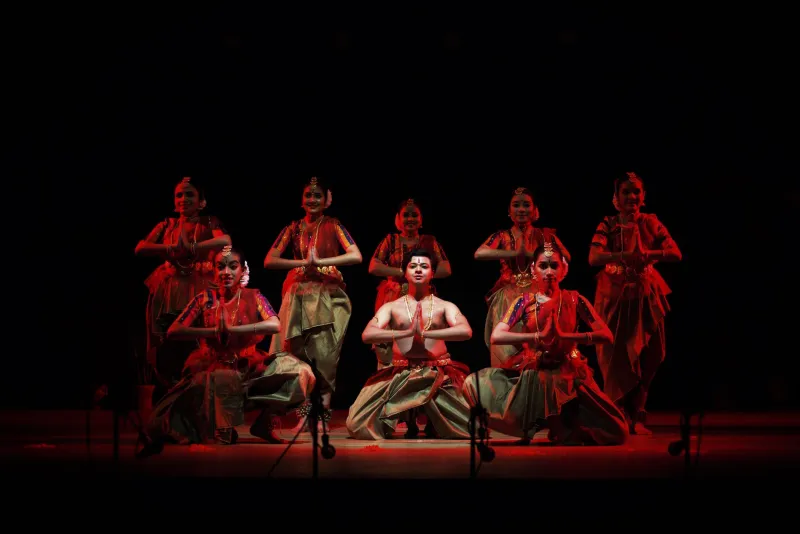
Grand Gestures, Big Feelings, and Family Drama: Why American Audiences Are Finally Ready for Bollywood-Style Romance
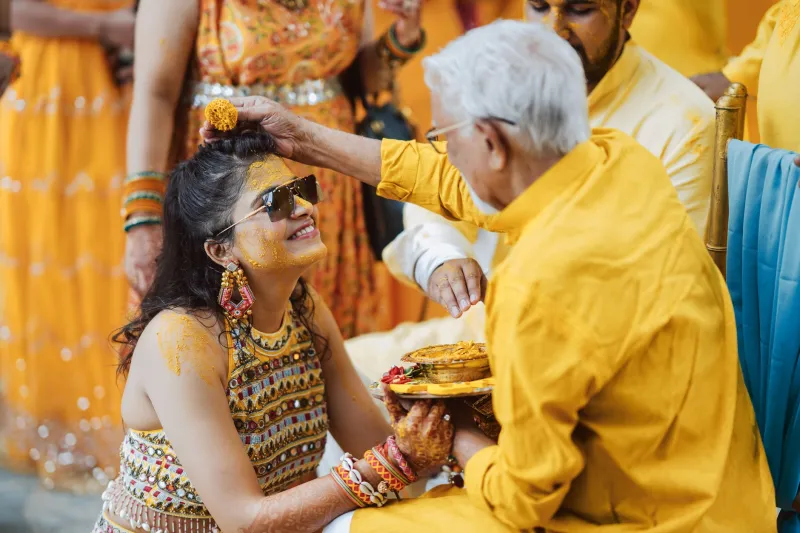
For a long time, the dominant flavor of American screen romance was irony. Couples traded witty barbs. Feelings were implied, never stated. Vulnerability got buried under sarcasm. The gold standard was restraint — think Mad Men, think early New Girl, think basically every prestige drama where two people who clearly love each other spend three seasons refusing to say so out loud.
That era isn't completely dead, but something is cracking open beside it. Audiences — especially younger ones — are turning toward stories that aren't afraid to be enormous. Stories where someone shows up in the rain. Where a mother's disapproval carries the same dramatic weight as a car chase. Where love isn't a subplot but the entire engine of the narrative. And if you want to trace where that hunger is coming from, you'd be smart to look at what South Asian storytelling has been doing for decades.
The Melodrama Rehabilitation
Here's a word that got unfairly dragged through the mud: melodrama. For years, calling something melodramatic was basically an insult — a way of saying the emotions were outsized, unearned, or embarrassing. Bollywood didn't get that memo, and honestly, good for Bollywood.
South Asian romantic cinema has always operated on the premise that love is outsized. It involves families, obligations, sacrifice, social pressure, and moments of pure theatrical catharsis. A character doesn't just feel sad — they feel it in a way that might require a musical number, or a slow-motion walk through falling flower petals, or a conversation with a disapproving grandmother that somehow carries more tension than any action sequence.
American audiences raised on streaming are rediscovering this tradition and finding it deeply satisfying. Platforms like Netflix have leaned into this, greenlighting South Asian romantic projects that pull directly from this well — Mismatched, Never Have I Ever, A Perfect Pairing — while mainstream productions are quietly borrowing the emotional architecture without always crediting the source.
Writers working in American television have started talking openly about Bollywood as an influence. The emotional directness, the willingness to let characters say what they mean, the centering of family as a romantic obstacle that's also a love story in its own right — these are tools that feel fresh in an American context precisely because they've been underused here.
The Family Is the Plot
One of the most distinct things about South Asian romantic storytelling is that it rarely treats family as mere backdrop. Parents aren't just obstacles to be overcome on the way to the couple getting together. They're full characters with their own desires, their own love stories, their own generational wounds. The romance between two people is almost always tangled up in the romance — or the tragedy — of the families they come from.
This complexity is showing up more and more in mainstream American content. Shows are increasingly built around multigenerational households, around the weight of parental expectation, around the particular tension of children caught between what their families want and what they want for themselves. That's not a new American story, but the emotional register it's being told in is shifting — louder, more direct, less likely to resolve neatly.
Audience researchers have noted a post-pandemic hunger for stories about connection that goes beyond the couple. Viewers who spent years in isolation with their own families — for better or worse — came out of it wanting narratives that took those relationships seriously. South Asian storytelling, which has always treated family as a primary dramatic unit, was already built for exactly that moment.
Post-Marvel, Post-Irony
There's a broader cultural context here worth naming. The superhero era of American cinema trained audiences to process emotion through spectacle — to feel things via explosions and CGI stakes rather than intimate human drama. As that era winds down, a vacuum has opened up. What fills it?
A growing number of critics and industry observers are pointing to the return of unabashed sincerity. Not naive sincerity — not stories that pretend life is simple — but the kind of emotional commitment that says: this matters, these feelings are real, and we're going to sit in them for a while. That's a deeply South Asian storytelling value, and it's one that translates.
The unapologetic emotionality of desi romance narratives — the willingness to be devastated, to be joyful in a way that fills a room, to treat love as something genuinely sacred rather than just another character beat — hits differently when audiences are exhausted by ironic detachment and CGI spectacle. It feels, weirdly, like relief.
The Music Piece You Can't Ignore
You can't talk about Bollywood romance without talking about the music, and the music is doing its own crossover work in the US. The emotional grammar of a South Asian love story is often written in its soundtrack — a swelling string arrangement that tells you exactly how to feel, a song that arrives at the precise moment the couple's feelings become undeniable.
American productions are borrowing this too, often literally. South Asian composers and music supervisors are increasingly being brought into American projects specifically to recreate that emotional swell, that sense of a love story that has its own score. The influence isn't just narrative — it's sonic. The Bollywood effect is as much about how a scene sounds as how it's written.
For South Asian audiences in the US, this is a particular kind of validation. The romantic language of their parents' films, the emotional shorthand of a culture they grew up navigating between two worlds — it's being recognized as not just valid but desirable. Not exotic. Not niche. Genuinely influential.
What This Means Going Forward
The Bollywood effect on American romance isn't a trend that's going to peak and disappear. It's a recalibration. As South Asian creators gain more ground in American film and television — as writers' rooms become more diverse, as streaming platforms continue to invest in desi content for global audiences — the cross-pollination is going to keep deepening.
The love story Americans are hungry for right now is one that takes feelings seriously. That lets people be dramatic about the things that deserve drama. That understands a mother's phone call can be as high-stakes as any thriller plot. South Asian storytelling has known this for generations.
America is just catching up.