The Invisible Architects: South Asian Beatmakers Are Running American Pop From the Shadows
There's a moment in a lot of hit songs where something feels slightly different — a percussive hit that sits in a weird, beautiful pocket, a melodic loop that carries emotional weight you can't quite name, a rhythm that makes your body respond before your brain catches up. Chances are, if you've felt that recently, a South Asian producer had something to do with it.
They don't always get the co-producer credit in the liner notes. They don't always show up on the press run. But in studios from Atlanta to Los Angeles to Toronto, a generation of beatmakers and composers with roots in India, Pakistan, Sri Lanka, and Bangladesh are quietly doing some of the most inventive sonic work in American music right now — and the mainstream is eating it up without always knowing where it came from.
The Beat Beneath the Beat
To understand what's happening, you have to understand what South Asian music actually brings to a production table that's been dominated by the same sonic vocabulary for decades.
Take the tabla — a hand drum with a tonal complexity that Western percussion simply doesn't replicate. Or the dhol, that double-headed barrel drum that punches through a mix with a low-end thud and a high-end crack that modern trap producers spend thousands on plugins trying to fake. Then there's the sitar, which has been sampled and interpolated in Western music since the '60s, but is now being used in far more nuanced ways than the psychedelic shorthand it once represented.
Producers of South Asian descent aren't just dropping these sounds into tracks as exotic seasoning. They're building entire rhythmic and harmonic frameworks around them — and then dressing those frameworks in whatever genre clothing makes sense for the artist they're working with. The result is something that feels fresh to American ears precisely because it draws from a musical tradition most listeners here have never studied, even if they've felt its pull.
Who's Actually in the Room
The names you need to know aren't always the ones attached to the finished product, but they're accumulating credits fast.
Producers like Tainy — Puerto Rican, but deeply plugged into a global pop network that includes South Asian collaborators — have opened doors that are now being walked through by beatmakers who grew up listening to A.R. Rahman while also studying Timbaland's drum programming. The cross-pollination is real and it's accelerating.
In the indie and alternative space, producers with South Asian backgrounds have been even more experimental. Think of the way certain bedroom-pop tracks have started incorporating tanpura-style drone textures under otherwise very Western chord progressions, or how the rhythmic displacement found in classical Carnatic music — where beats shift and cycle in ways that feel almost mathematically alien to a Western 4/4 listener — has started showing up in R&B arrangements.
Then there are the composers working in film and television, many of whom are South Asian, who are scoring prestige American TV in ways that blur the line between Western orchestral tradition and South Asian classical forms. That blurring is leaking back into pop production. It's a feedback loop.
The Credit Gap
Here's where the story gets complicated. American music has a long, uncomfortable history of absorbing sounds from marginalized communities without fully acknowledging the source. South Asian producers are navigating that same tension — and many are doing it consciously.
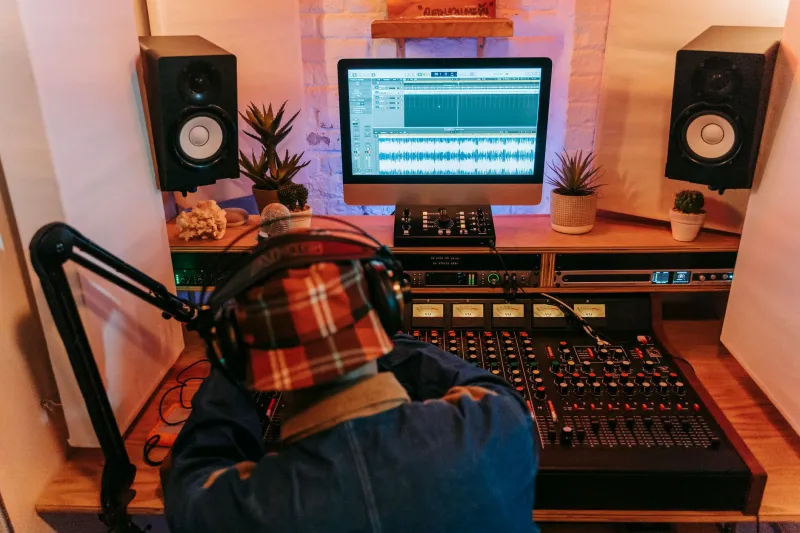
The business of music production is famously opaque. A producer might contribute a foundational element to a track and still end up with a reduced credit or a flat buyout fee rather than royalties. For South Asian producers who are newer to the industry's inner circles, or who come from immigrant family backgrounds where the music industry wasn't exactly a mapped career path, the leverage to negotiate those credits isn't always there yet.
There's also a cultural humility factor that some producers themselves acknowledge. In many South Asian households, the idea of loudly promoting yourself — of stepping out front and making it about you — runs counter to how success is supposed to look. You do the work, the work speaks. That's a beautiful ethos, but it doesn't always translate well in an industry where visibility directly correlates with future opportunities.
Some are pushing back on that now. Younger producers, many of them second-generation South Asian Americans who grew up watching their parents navigate invisibility in their own professional fields, are more assertive about claiming their space. They're building social media presences, doing interviews, and making sure their names are on the records they make.
What the Sound Is Actually Doing
Beyond the business politics, there's something worth sitting with purely on an artistic level: the sounds being introduced into American pop by South Asian producers are genuinely expanding what the music can do emotionally.
South Asian classical music is built on ragas — modal frameworks that are associated with specific times of day, seasons, and emotional states. A producer who grew up immersed in that tradition brings an intuitive understanding of how melody creates mood that goes beyond the major/minor binary most Western pop operates in. When that understanding gets applied to a pop or R&B track, the result often has a depth that listeners respond to without being able to articulate why.
Similarly, the rhythmic complexity of South Asian percussion traditions — the way a tala cycle can stretch across seven or eleven beats and still feel inevitable when it resolves — gives producers a toolkit for building tension and release that's genuinely different from the four-on-the-floor patterns that dominate club music.
You can hear this in the way certain current pop hits breathe differently. The spaces between the beats, the way a vocal hook lands — these are production choices, and increasingly, they're choices being made by people who learned to hear music through a very different cultural lens.
The Takeover That's Already Happening
Calling it a "quiet takeover" might actually undersell it. South Asian producers aren't infiltrating American pop — they're part of it. The question is whether the industry's recognition infrastructure catches up to the reality.
Award shows are slowly beginning to reflect more diverse production credits. Streaming platforms are getting better at surfacing production metadata, which means listeners can actually trace a sound back to its source if they're curious. And a new generation of music journalists and critics — many of them South Asian American themselves — are writing about these contributions with the specificity and context they deserve.
The artists who work with South Asian producers are also, gradually, doing more to acknowledge those collaborations publicly. That matters. When a major pop star tells their 40 million Instagram followers that a producer from Mumbai or Karachi or Chennai helped shape their album, it changes the cultural conversation.
At Kareraha, we've been watching this shift for a while. South Asian creative talent has always been here — in the music, in the culture, in the DNA of sounds that millions of Americans love without knowing their origin story. The moment where that talent steps fully into the light isn't some distant future event. It's already underway. The credits are just catching up.