The Desi Stage Revolution: South Asian Voices Are Rewriting What American Theater Looks Like
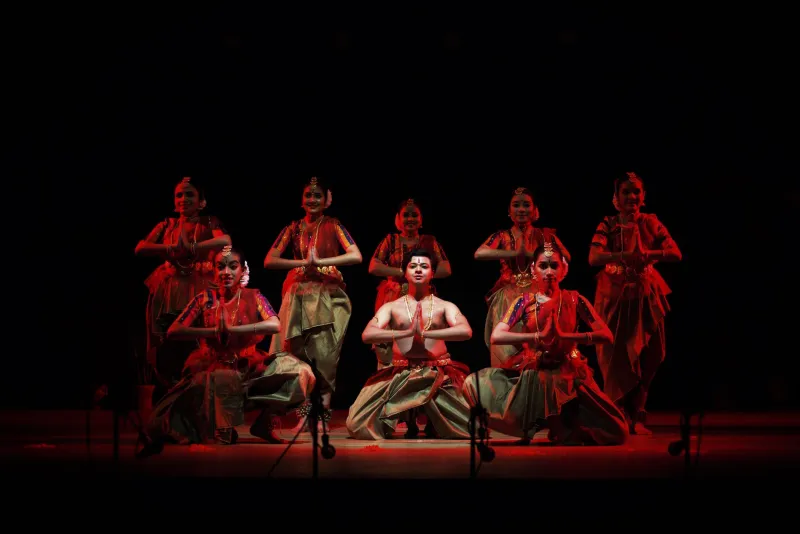
For a long time, if you were South Asian and serious about storytelling, you had two real paths in America: music or film. Theater? That felt like someone else's house — a place where desi narratives showed up occasionally as a subplot, rarely as the whole story. But something has shifted in the last several years, and the American stage is starting to look a whole lot more like the communities sitting in the audience.
From intimate black box productions in Brooklyn to mainstage slots at regional theater festivals in Chicago and Seattle, South Asian writers, directors, and performers are not just knocking on the door anymore. They're building new rooms.
The Productions Changing the Conversation
Let's talk specifics, because this movement has receipts.
Kamila, a play centering a Pakistani-American family navigating grief and generational silence, made waves during its off-Broadway run and earned its playwright comparisons to the early work of Ayad Akhtar — himself a towering figure in this space whose Pulitzer-winning Disgraced cracked open what was possible for South Asian stories on American stages back in 2012. A decade-plus later, the landscape Akhtar helped seed is flowering in ways even optimists didn't fully predict.
Then there's the work coming out of companies like Silk Road Rising in Chicago, which has spent years programming stories from South and Southeast Asian perspectives and has quietly become one of the most important cultural institutions most mainstream theater coverage still underrates. Their productions don't just cast South Asian actors — they center South Asian interiority, which is a meaningfully different thing.
On the performance side, artists like Shayok Misha Chowdhury — whose experimental work Public Obscenities generated serious critical heat — are pushing the form itself, not just the content. That's important. It signals that South Asian artists aren't just asking to tell their stories within existing theatrical frameworks. Some of them are questioning the framework entirely.
Why Theater Hits Different
You might wonder why theater matters when South Asian artists are already making undeniable noise in music and film. Fair question. But theater offers something those mediums don't, at least not in the same way: live, communal, unmediated presence.
When a desi story unfolds on a stage sixty feet in front of you — in real time, with real bodies, in a shared room — the cultural transmission is almost physical. There's no algorithm deciding who sees it, no streaming platform burying it in a subcategory. The audience and the story are in the same space, breathing the same air. For communities that have often felt like their full humanity gets compressed or exoticized in mainstream American media, that kind of presence carries real weight.
Theater also tends to reach gatekeepers — journalists, academics, arts funders, policy types — who shape cultural narratives in ways that ripple outward. A celebrated run at a regional theater festival can reframe how a community gets perceived in ways that a viral song, for all its reach, sometimes can't.
The Walls That Are Still Standing
None of this means the structural barriers have dissolved. They haven't, and it would be dishonest to pretend otherwise.
American theater, at the institutional level, remains overwhelmingly white in its leadership. Artistic directors, literary managers, the people who decide which scripts get developed and which get passed over — the demographics there still don't reflect the country, let alone its growing South Asian population. A playwright can write the most vital, urgent, beautifully constructed script about a Tamil family in New Jersey or a Sikh community in Fresno, and it can still sit in a pile for years waiting for someone in a position of institutional power to champion it.
Funding is its own obstacle. South Asian theater companies and productions often operate on shoestring budgets compared to their mainstream counterparts, relying heavily on community donations and small grants. The major arts endowments and foundations have gotten better about prioritizing diverse voices, but "better" is doing a lot of work in that sentence.
And then there's the audience development challenge. Getting South Asian Americans — many of whom weren't raised with a theater-going habit — to see themselves as part of the theater community is ongoing work. It's not a criticism; it's just a reality shaped by decades of exclusion. If the stage never looked like you, why would you think of it as yours?
How the Community Is Pushing Through
The strategies being used to dismantle these barriers are practical, creative, and deeply community-rooted.
Festivals specifically designed to showcase South Asian theater — like the work coming out of organizations such as the South Asian Arts Incubator — create concentrated moments of visibility that individual productions can't always generate alone. They bring writers, directors, and performers into the same space, build networks, and generate the kind of critical mass that funders and mainstream institutions start to notice.
Mentorship pipelines matter too. Established South Asian theater artists are increasingly making it a point to pull younger talent into rooms and processes that would otherwise take years to access. That's not charity — it's infrastructure.
And social media, for all its chaos, has been genuinely useful here. A compelling clip from a desi theater production can reach second-generation South Asian Americans in cities where that production will never tour, building an audience and a sense of community ownership around work that might otherwise feel geographically limited.
The Longer Game
What's happening on American stages right now isn't a trend that will peak and recede. The South Asian American population is too large, too culturally engaged, and too creatively ambitious for that. The writers coming up right now grew up watching Bend It Like Beckham and Monsoon Wedding and Never Have I Ever, absorbing the message that their stories are worth telling — and now they're writing plays.
The theater world is catching on, slowly but with increasing momentum. And the South Asian artists leading this charge aren't waiting around for a formal invitation. They're producing their own work, building their own companies, and creating the conditions for the next generation to walk into rooms that are already halfway open.
The desi stage revolution is real. Pull up a seat.