Devotion Goes Mainstream: How Sufi Vocals Quietly Took Over America's Biggest Stages
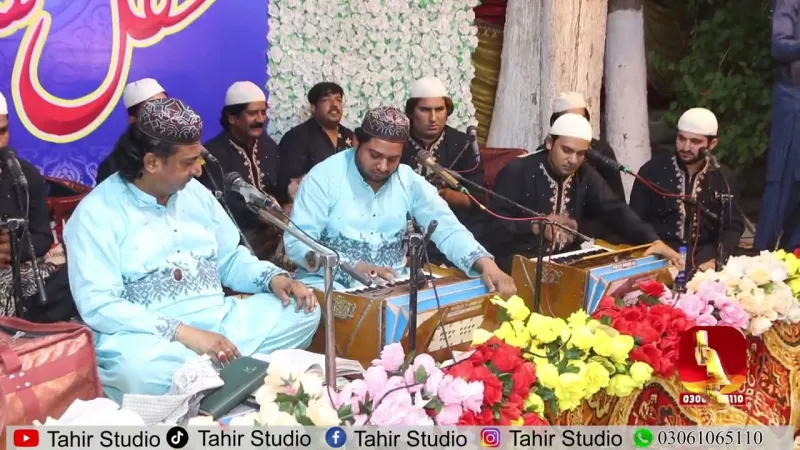
Photo: qawwali singers performing harmonium stage concert, via i.ytimg.com
There's a moment that keeps happening at American festivals in 2024 and beyond. The beat drops out, a devotional vocal soars over the crowd — syllables most of the audience can't translate but everybody feels anyway — and 40,000 people lose their minds.
That vocal is usually Sufi. And its journey from shrine to main stage is one of the great underreported stories in American music.
It Started With One Man and a Mic
You can't tell this story without Nusrat Fateh Ali Khan. When the legendary qawwal began touring the US in the late 1980s, he wasn't chasing crossover — the crossover came to him. Pearl Jam's Eddie Vedder became a vocal fan. Peter Gabriel signed him to Real World Records. Suddenly, a form of devotional music designed for Sufi shrines was playing college theaters and folk festivals across America.
What American listeners heard wasn't exoticism. It was intensity. Qawwali builds the way a great gospel service builds — call and response, escalating rhythm, a vocalist pushing toward something that feels like transcendence. US audiences raised on church music and arena rock recognized the architecture, even if they didn't know the vocabulary.
The Sample Trail
Then came the producers. Nusrat's voice became one of the most sampled in electronic music, showing up in everything from Massive Attack collaborations to massive EDM drops. Every time a festival set slowed down for a keening, melismatic vocal over a four-on-the-floor beat, the pipeline got wider.
Today's version looks different. Producers of South Asian descent — many of them American-raised — aren't just sampling the legends. They're recording live qawwali harmonies, hiring tabla players and harmoniumists for sessions, and writing original hooks in Urdu and Punjabi because the sound demands it, not because it's a trend. The result is music that treats Sufi vocal tradition as a foundation, not a flavor.
Why Festival Crowds Can't Get Enough
Talk to promoters and they'll give you a practical answer: it works. Devotional vocals carry an emotional weight that cuts through festival noise. In a sea of synth stabs, a human voice pushing toward the divine is a pattern interrupt.
But there's something deeper happening. American audiences in the streaming era are trained to chase feeling over language. K-pop proved you don't need English lyrics to headline a stadium. Sufi-influenced electronic music is riding the same wave — and it arrives with centuries of built-in emotional gravitas.
There's also the diaspora effect. Second- and third-generation South Asian Americans grew up hearing this music at weddings, at family gatherings, on their parents' stereos. When they hear it at a festival, it's not discovery — it's recognition. And they bring their friends.
From the Shrine to the Sahara Tent
The new generation isn't waiting for permission. Artists are folding qawwali's DNA into hip-hop, house, and ambient music, playing sets that move from a cappella devotional passages into full electronic drops without breaking a sweat. Some are direct descendants of qawwali lineages; others are students of the form who found it through a YouTube rabbit hole at 2 a.m. Either way, the respect is audible.
The irony is rich: a musical tradition built on dissolving the self in devotion has become one of the most effective tools for dissolving the boundary between artist and audience. When that vocal hits at golden hour and the crowd sings back phonetically, nobody in the field is thinking about genre labels.
Where It Goes Next
The pipeline is only widening. Expect more Sufi vocalists on pop features, more devotional structures inside dance records, and more young South Asian American artists reclaiming the sound on their own terms — not as world music, but as American music. Because that's what it is now.
Nusrat Fateh Ali Khan used to say music had no religion. Turns out it doesn't need a visa either.