Every Desi Household Has an Unpaid Talent Scout — and Honestly, the Industry Should Be Taking Notes
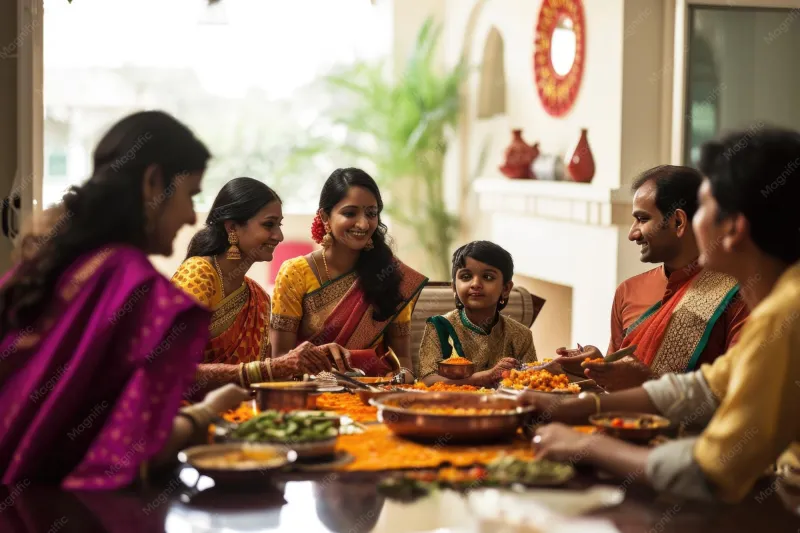
Photo: indian family gathering celebration aunties talking party, via img.freepik.com
Somewhere in America right now, an aunty is on the phone delivering a talent report. The Sharma boy — you know, the one who sang at the Diwali function — he's been posting covers and they're getting views. The Patel cousins' dance group placed second at the competition in Dallas. And the wedding band from the Khans' daughter's reception? Going places. Mark my words.
No one pays her. No one appointed her. But make no mistake: she is doing A&R.
The Informal Network That Never Sleeps
Every South Asian community in every American city runs on this infrastructure. It's a word-of-mouth network that predates the internet, with a reach that would make any marketing department weep. One aunty at a community event hears a kid sing. By Thursday, three temple committees have her on their shortlist. By next month, that kid has booked four weddings, a cultural festival, and a talent show slot.
The industry spends millions on scouting, data analytics, and trend forecasting. The aunty network does it for free, at scale, with a distribution channel (the phone tree, now upgraded to WhatsApp) that converts discovery into bookings faster than most agencies.
The Track Record Is Real
Plenty of artists now on US stages got their first reps this way. The wedding circuit — powered entirely by community word-of-mouth — has long been the proving ground where South American — sorry, South Asian — American performers learned to read a room, hold a crowd, and play for four hours straight. It's a boot camp with buffet. Many working musicians, DJs, and vocalists will tell you flatly: the community gave them their first mic.
And the aunties aren't just bookers. They're critics, publicists, and brand managers. They'll tell you your set was too long. They'll tell you which song made grandma cry. They'll tell you — in front of everyone — that you've improved since last year. It's feedback, delivered with a directness no label executive would dare.
Okay, But It's Complicated
Here's where the rose-colored glasses come off. The same hype machine that lifts you up can also define you before you're ready. Get labeled "the singer" at age nine and you may spend your twenties arguing with a persona you never chose. The network's taste is conservative by nature — it rewards the familiar, the crowd-pleasing, the shaadi-approved. Experimental artists often find the community applause dies exactly when the work gets interesting.
And there's the pressure. When your aunties are your street team, a flop isn't just a flop — it's a disappointment, with aunties' faces attached. Some artists thrive on that accountability. Others carry it like a weight.
There's also the gatekeeping paradox: a network built on personal relationships can be hard to break into if your family just moved to town. Talent matters, but so does your mom's friendship circle.
Blessing, Burden, or Blueprint?
My take: it's all three, and it's also something the broader industry should study instead of smirk at.
The aunty network works because it's built on actual relationships and repeated exposure — the exact things streaming-era A&R keeps trying to simulate with data. It's hyperlocal trust at national scale. Yes, it's noisy, opinionated, and occasionally suffocating. It's also the reason a generation of South Asian American performers got stage time before anyone with a budget thought to give it to them.
So the next time an aunty corners you at a function to inform you that her friend's daughter is "very talented, very talented," don't dismiss it. You might be standing in front of the most effective, most underappreciated talent pipeline in American music.
Just maybe don't ask her to sign an NDA. She'll tell everyone you did.